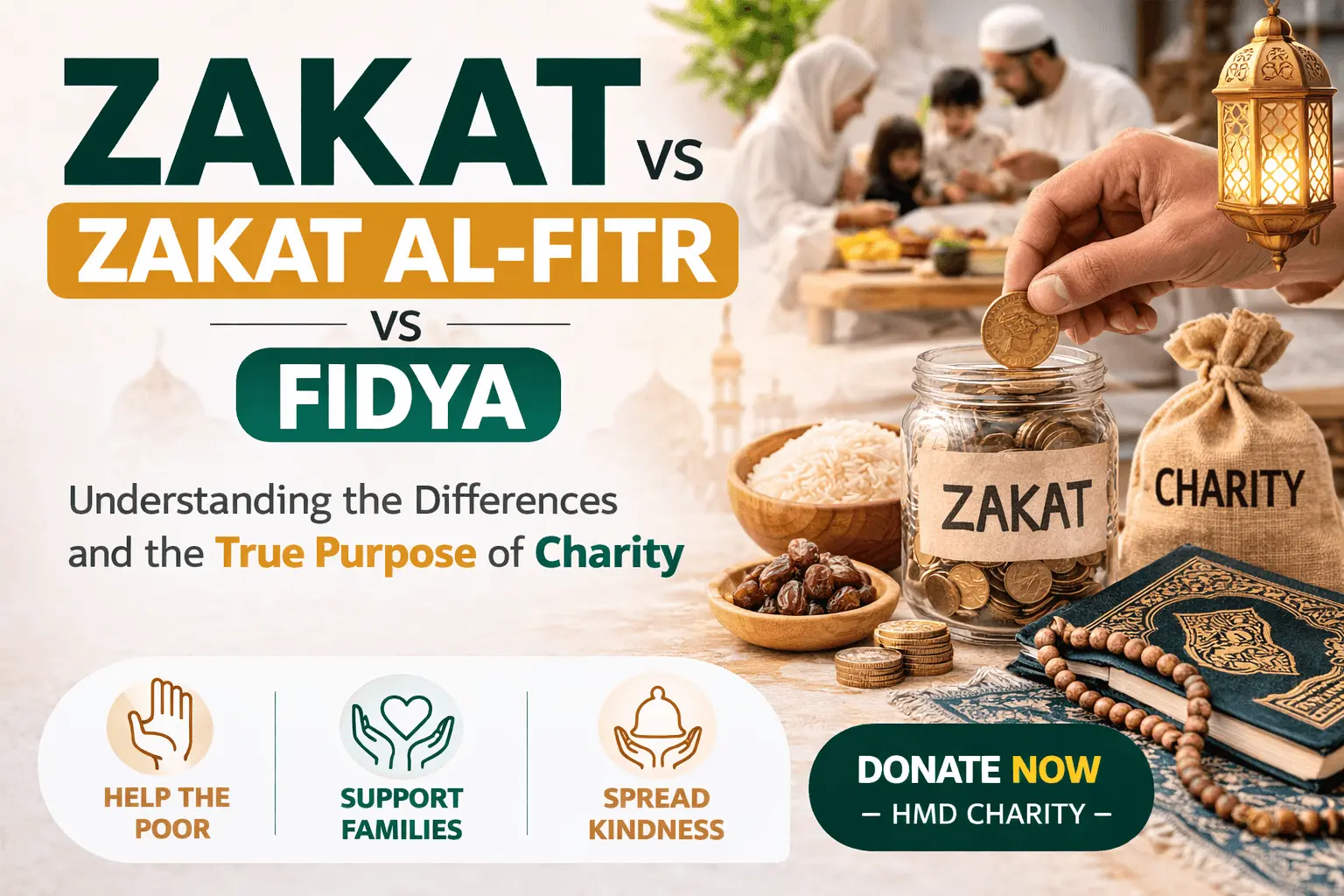
Understanding the Difference: Zakat, Zakat al-Fitr, and Fidya
 admin
adminZakat vs Zakat al-Fitr vs Fidya: Understanding the Differences in Islamic Charity
Charity is one of the most important principles in Islam. It ensures that wealth circulates within society and that the poor and needy are supported. During Ramadan, Muslims commonly hear about three different forms of charity:- Zakat
- Zakat al-Fitr (Fitrana)
- Fidya
What is Zakat?
Zakat is one of the Five Pillars of Islam and is an obligatory charity that Muslims must give annually if their wealth exceeds a certain minimum amount called Nisab. The standard amount of Zakat is 2.5% of eligible wealth and savings held for one lunar year. Zakat helps reduce poverty and supports vulnerable members of society.Zakatable Assets (Wealth Subject to Zakat)
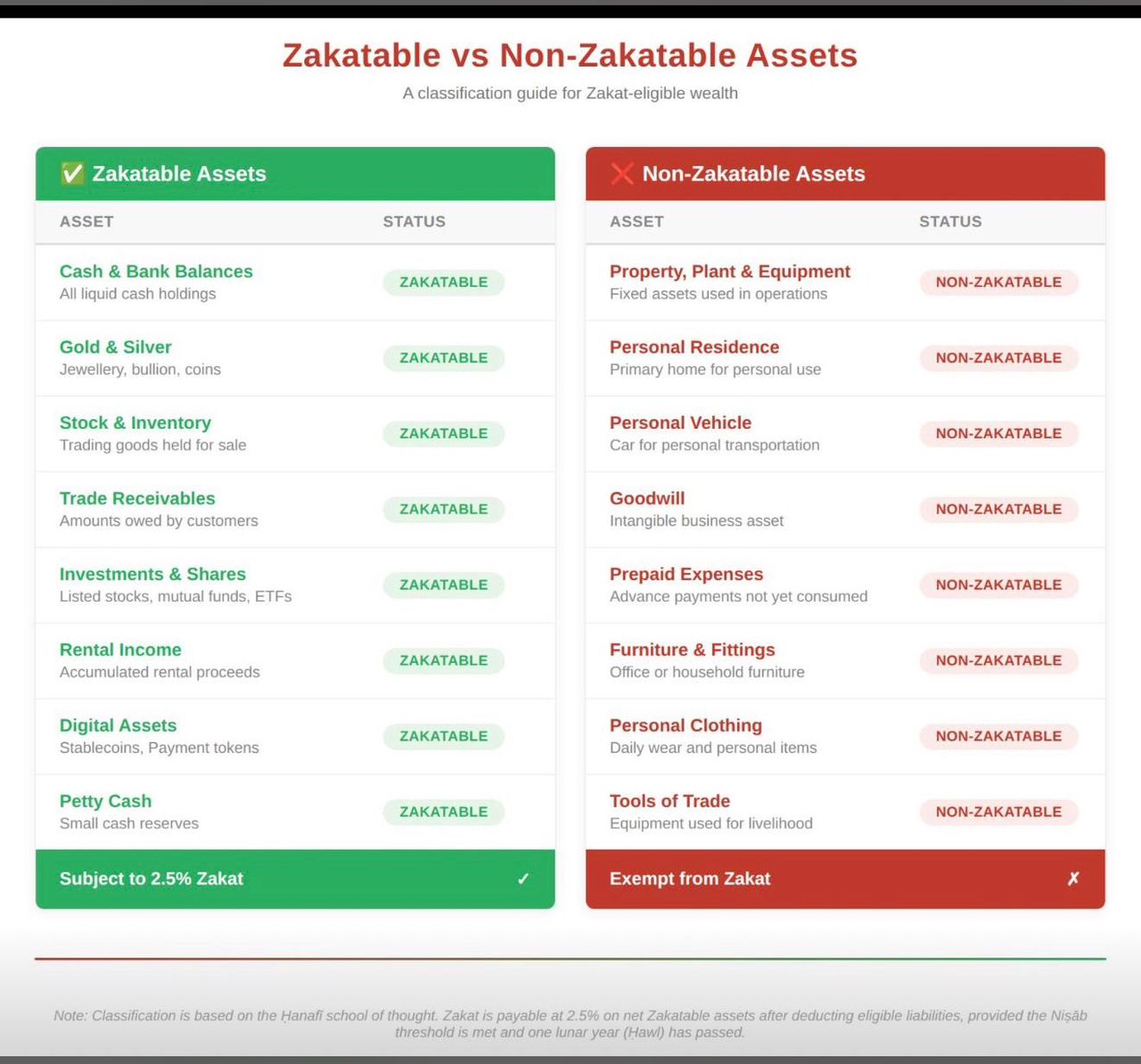
Zakat is generally paid on assets that are liquid or capable of growth, including:- Cash and bank balances
- Gold and silver
- Business inventory or stock for sale
- Trade receivables (money owed by customers)
- Investments such as stocks or mutual funds
- Rental income savings
- Certain digital assets or cryptocurrencies
Non-Zakatable Assets
Some possessions are essential for daily life and therefore exempt from Zakat.- Personal residence (home you live in)
- Personal vehicle
- Furniture and household items
- Clothing and personal belongings
- Tools used for earning a livelihood
- Business machinery or equipment
What is Zakat al-Fitr (Fitrana)?
Zakat al-Fitr, also known as Fitrana, is a charity given at the end of Ramadan before the Eid prayer. Unlike Zakat on wealth, Zakat al-Fitr is required for every Muslim, provided they can afford basic food.Key Points About Zakat al-Fitr
- Paid for each member of the household
- Includes children and dependents
- Must be given before the Eid prayer
- Traditionally given as food such as rice, wheat, or dates
- Often paid today as the monetary equivalent
What is Fidya?
Fidya is a compensation charity given when someone cannot fast during Ramadan due to permanent health reasons. This applies mainly to:- Elderly individuals who cannot fast
- People with chronic illness
- Individuals whose health prevents fasting permanently
How Fidya Works
For each missed fast, a person must feed one poor person. In many communities, this is calculated as the cost of one meal for each missed fast. If someone cannot fast the entire Ramadan (30 days), they should feed 30 needy people or donate the equivalent amount.Why These Charities Are Important
These charitable acts highlight the values of Islam:- Zakat: Redistributes wealth and reduces poverty
- Zakat al-Fitr: Ensures everyone can celebrate Eid
- Fidya: Allows those unable to fast to still support the needy
Support the Poor Through HMD Charity
Ramadan is a powerful opportunity to help families struggling with poverty. Through HMD Charity, donations help provide:- Food distribution for poor families
- Ramadan ration packs
- Zakat and Sadaqah assistance
- Support for vulnerable communities